
Why Winter is the Perfect Time to Start Flight Training in Iowa: 5 Advantages for Student Pilots
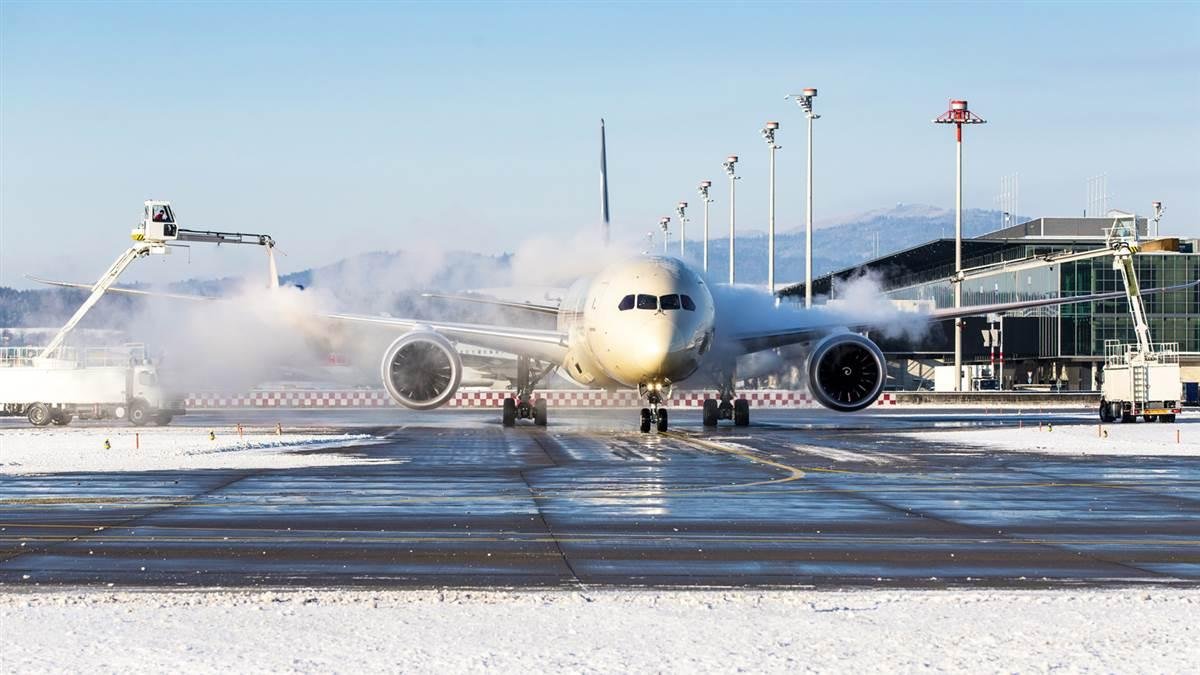
Considering flight training in Iowa? Discover why winter is the ideal season to begin your aviation career at Vertical Vision Flight Academy and earn your private pilot license.
The Benefits of Winter Flight Training at Vertical Vision Flight Academy
Starting your flight training during Iowa's winter months might seem counterintuitive, but experienced aviators know that cold-weather flying offers distinct advantages for student pilots. From superior aircraft performance to calmer Midwest skies, winter provides an ideal environment for learning to fly in Iowa.
Whether you're a young adult exploring career options or a professional considering a career change into aviation, winter flight training at Vertical Vision Flight Academy sets you up for success.
1. Smoother Air and More Predictable Weather Patterns
Winter flight training in Iowa benefits from naturally stable atmospheric conditions. Cold air is typically more uniform and predictable, with weather patterns that remain consistent throughout the day. Unlike summer flying in the Midwest, winter lacks the intense solar heating that drives rapid weather changes, turbulence, and unpredictable conditions.
Reduced Turbulence for Better Learning
The reduction in heat-driven turbulence creates a noticeably smoother flying experience across Iowa's airspace. Without strong thermal currents rising from heated surfaces, aircraft encounter fewer vertical air movements during climbs, approaches, and cruise segments. For student pilots and those with limited flight hours, this stable environment allows greater focus on essential skills like aircraft control, navigation, and flight procedures without constant corrections for bumpy conditions.
Winter's predictable weather also makes preflight planning and in-flight decision-making more straightforward. When overcast conditions appear in the morning over Iowa, they typically persist into the afternoon, providing consistency that helps students develop sound weather analysis skills—critical for private pilot certification.
2. Superior Aircraft Performance in Cold Iowa Weather
One of the most significant advantages of winter flight training is enhanced aircraft performance. Cold, dense Iowa air delivers multiple performance benefits, including increased engine power output, greater lift generation, shorter takeoff distances, and improved climb rates.
Understanding Density Altitude Benefits
On particularly cold Iowa days, pilots may experience negative density altitude, meaning the air is denser than standard atmospheric conditions. Your training aircraft performs as if operating at a lower elevation, making a substantial difference in responsiveness.
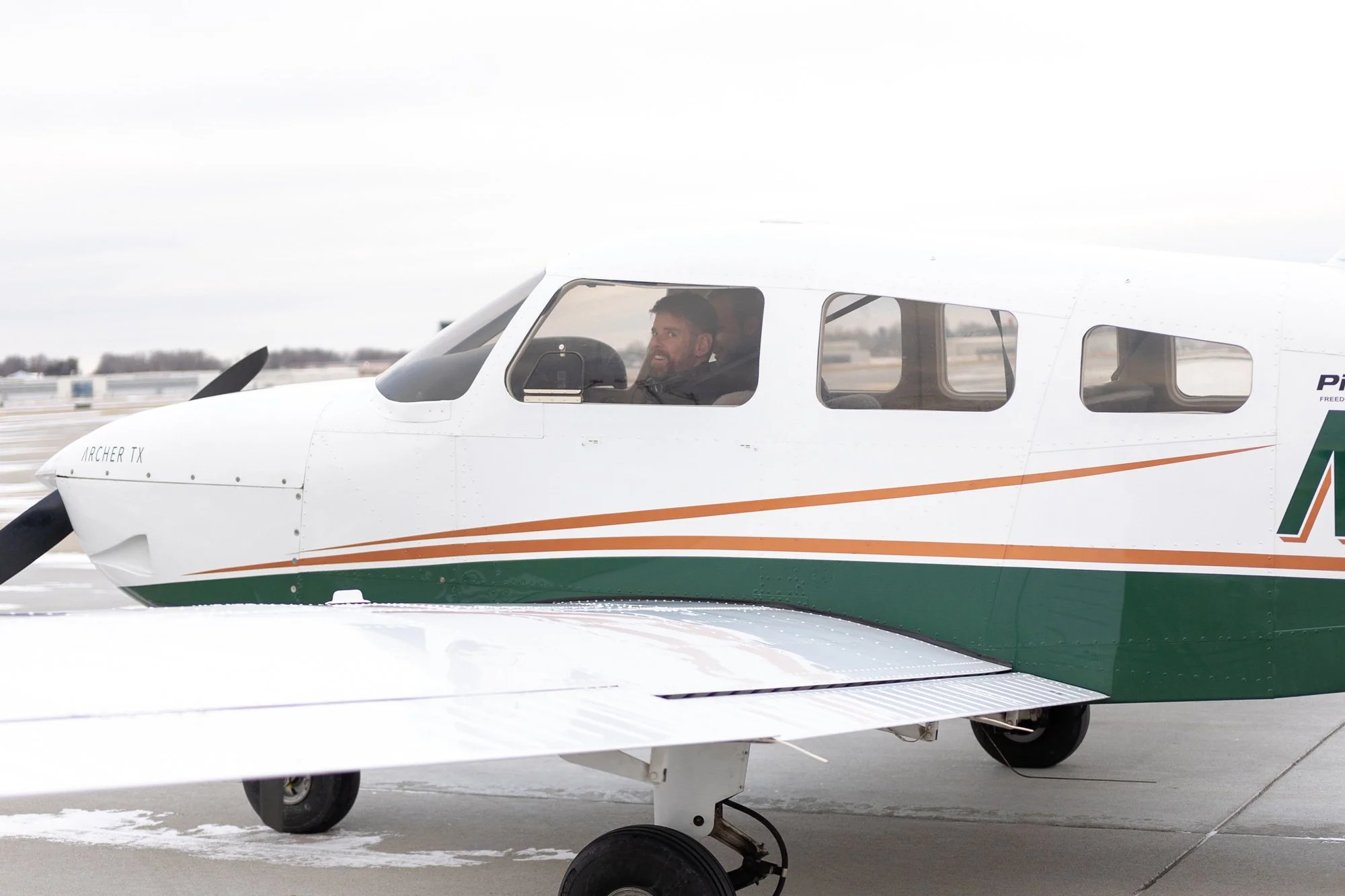
At Vertical Vision Flight Academy, our training aircraft, including Piper Archers, Tecnam P-Mentors, and Piper Seminole, transform in sub-freezing temperatures. A four-seat trainer that feels sluggish on hot summer afternoons becomes an eager climber in Iowa's winter conditions, delivering stronger acceleration and improved climb rates.
While increased power settings may result in slightly higher fuel consumption, the trade-off delivers stronger climbs, smoother air, and efficient cruise performance that makes cold-weather flight training both manageable and rewarding for students working toward their private pilot, instrument, commercial, or multi-engine ratings.
3. Less Air Traffic Congestion in Iowa Airspace
Winter flying in Iowa means significantly reduced air traffic at training airports. With fewer aircraft in the pattern and less congestion on the radio, student pilots at Vertical Vision Flight Academy benefit from more airspace to practice maneuvers like climbs, turns, and stalls. You'll experience a less hectic radio environment for developing communication skills, reduced stress and pressure during critical training phases, more personalized attention from air traffic control, and better practice opportunities for instrument training approaches.
This quieter training environment allows students, whether you're a young adult starting your aviation career or a professional making a career change, to build confidence and competency without the pressure of peak summer traffic patterns.
4. Building Real-World Weather Decision-Making Skills
Professional pilots must fly in varied conditions, and winter flight training in Iowa provides valuable exposure to different weather scenarios. Training during winter helps student pilots develop critical weather assessment and decision-making abilities, adaptability to Midwest weather conditions, experience with reduced visibility operations, judgment skills for go/no-go decisions, and understanding of winter weather systems unique to Iowa.
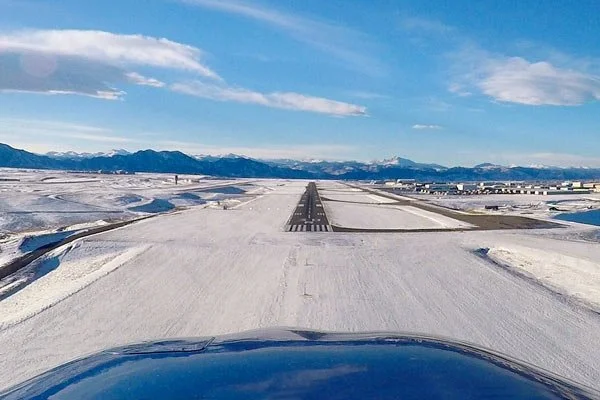
Many pilots discover that Iowa winters offer some of the year's best flying conditions: crystal-clear visibility, calm dense air, and spectacular views of snow-covered landscapes. Cold, sunny winter days often bring more stable air with less thermal turbulence than summer, combined with reduced traffic patterns.
Flexibility is Key to Iowa Flight Training
Successful winter flight training requires flexibility. On days with challenging weather, Vertical Vision Flight Academy provides comprehensive ground instruction and simulator sessions to keep your training progressing productively. When conditions are favorable, students can take full advantage of excellent flying opportunities. With proper planning, appropriate caution, and sound judgment, winter flying in Iowa is safe and effective for student pilots at all levels.
5. Perfect Timing for Peak Flying Season
The average Private Pilot License (PPL) takes approximately 3-5 months to complete at Vertical Vision Flight Academy. Starting your flight training in winter means you'll be ready for your checkride by spring or early summer, perfect timing to enjoy the peak Midwest flying season.
Benefits of this timeline include:
Completing private pilot training during optimal performance conditions
Building experience when Iowa weather conditions favor learning
Having your certificate in hand for summer cross-country adventures across the Midwest
Seamless transition into instrument rating or commercial training during ideal weather
For career changers, this timeline allows you to complete your private pilot training while maintaining your current job, then transition into advanced ratings (instrument, commercial, multi-engine, or instructor ratings) as you plan your aviation career.
Start Your Aviation Career at Vertical Vision Flight Academy This Winter
Winter flight training in Iowa offers compelling advantages: smoother air, superior aircraft performance, less traffic congestion, valuable weather experience, and ideal timing for spring certification. These benefits combine to create an environment where student pilots can focus on skill development and build confidence efficiently.
At Vertical Vision Flight Academy, our experienced instructors, modern fleet of Piper Archers, Tecnam P-Mentors, and Piper Seminoles, and comprehensive training programs for private pilot, instrument, commercial, multi-engine, and instructor ratings make us Iowa's premier choice for flight training.
Ready to Start Your Flight Training in Iowa?
Whether you're a young adult exploring aviation as a career or a professional ready for a career change, winter is the perfect time to begin your journey toward becoming a certified pilot. Contact Vertical Vision Flight Academy today to schedule a discovery flight and learn more about our winter flight training programs.
[Schedule Your Discovery Flight] | [Learn About Our Programs] | [Meet Our Instructors] | [See Our Fleet]